Year 13 Psychology Students Take on the Challenge of Statistical Testing
Our Year 13 A Level Psychology students have recently been developing an important set of higher-level skills as part of their studies: using statistical tests to determine whether psychological findings are statistically significant.
Students have been learning how psychologists use statistical analysis to move beyond simply describing their results and instead consider what their findings might tell us about patterns, differences and the likelihood that results could have occurred by chance. This has involved learning how to select and complete appropriate statistical tests, interpret their findings and understand what the results mean within the context of psychological research.
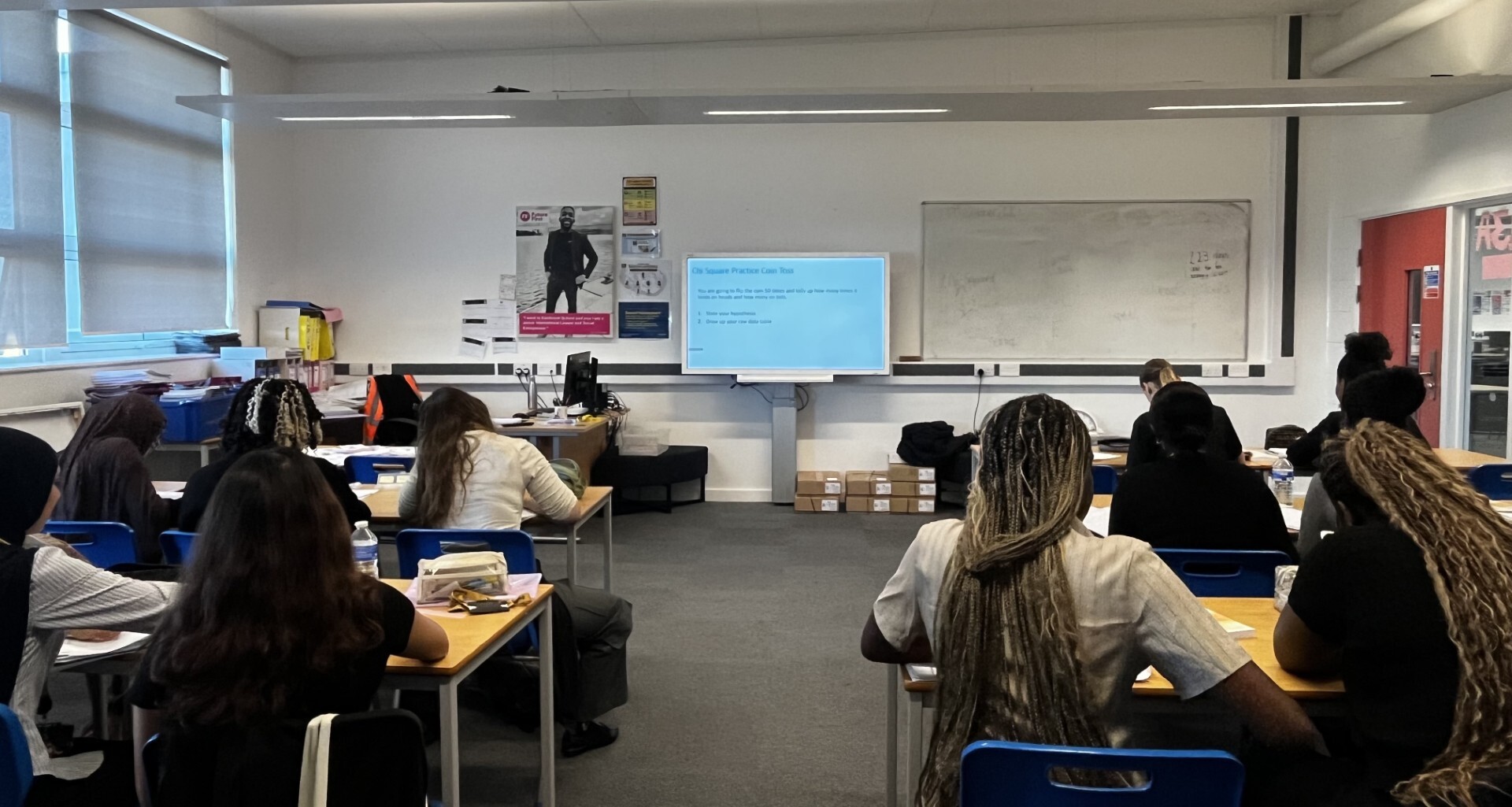
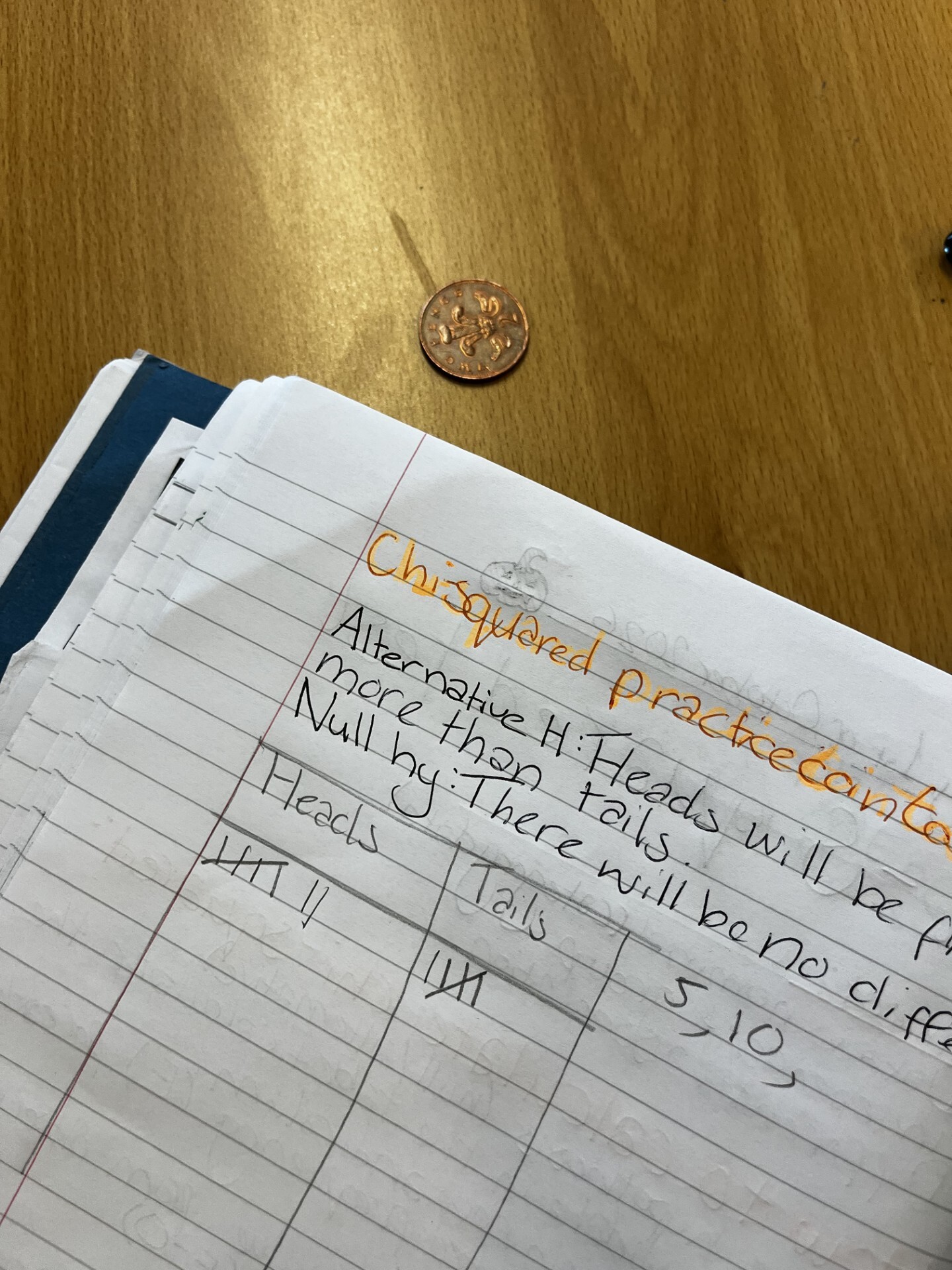
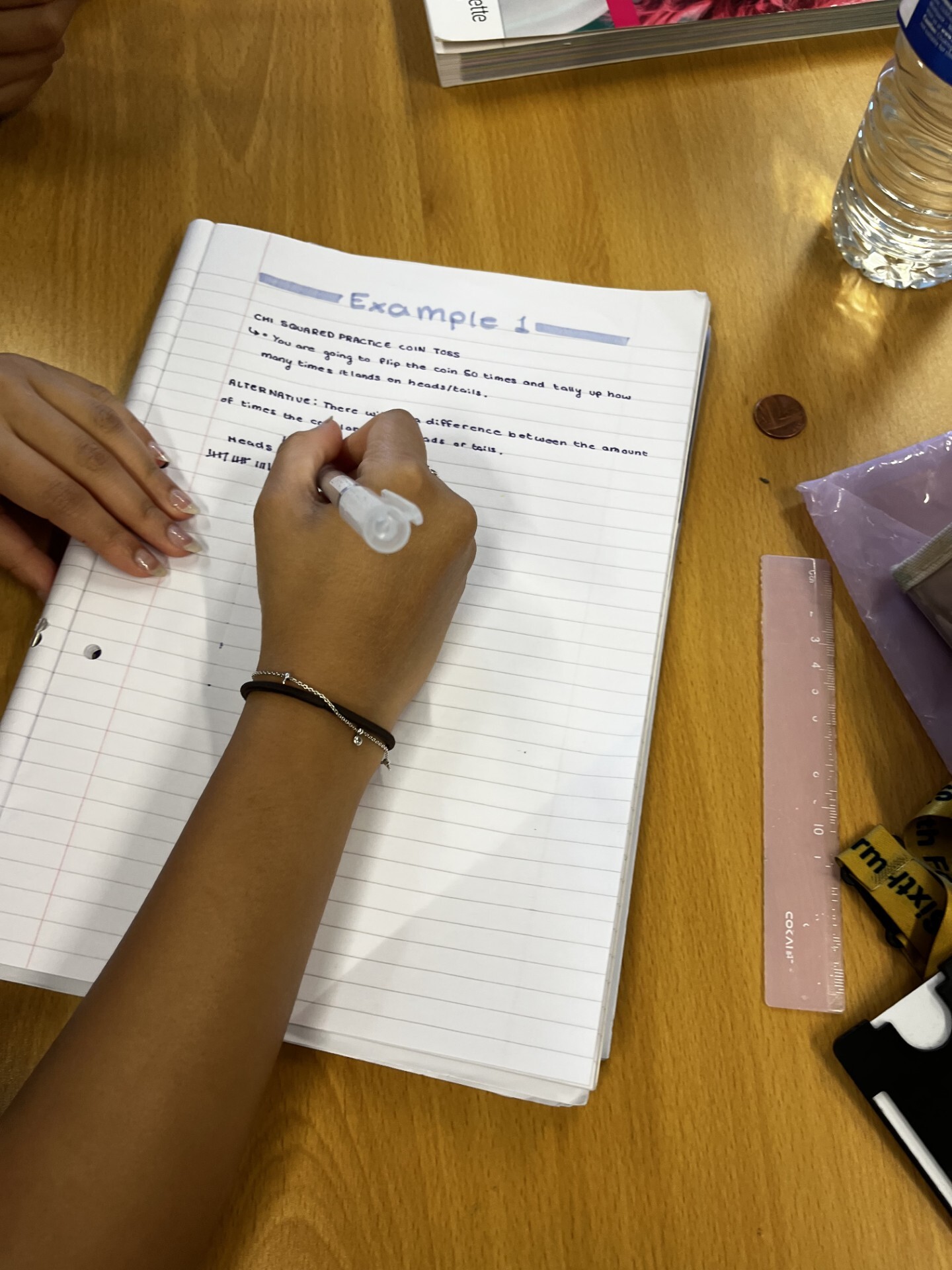
To bring these ideas to life, students had the opportunity to collect their own raw data through a practical coin-flipping activity. Rather than simply working with pre-prepared data, students actively generated their own results, carefully recording their findings to analyse whether they were significant using a Chi-Squared test on the nominal data they collated. The activity provided a valuable opportunity to connect classroom theory with the realities of psychological research.
Statistical testing is a challenging aspect of A Level Psychology and requires students to combine mathematical understanding with careful interpretation and application of psychological research methods. At this stage of their course, they are being asked to practise complex, high-level skills, including accurately carrying out statistical calculations, interpreting outcomes and making appropriate conclusions from data.
We are incredibly proud of the dedication, focus and resilience our Year 13 students have shown throughout this unit. Their willingness to engage with challenging material, practise unfamiliar skills and learn from the process demonstrates the progress they are making as Psychology students.